
New Polity Press, an arm of the think tank New Polity, exists to publish works that interpret human social life in light of the world’s creation and redemption in Christ, so that Christians, entering more fully into the Church, may see further, live more deeply, and help the world fulfill itself in holiness.
NEw Polity Press
What does it mean to be holy in America?
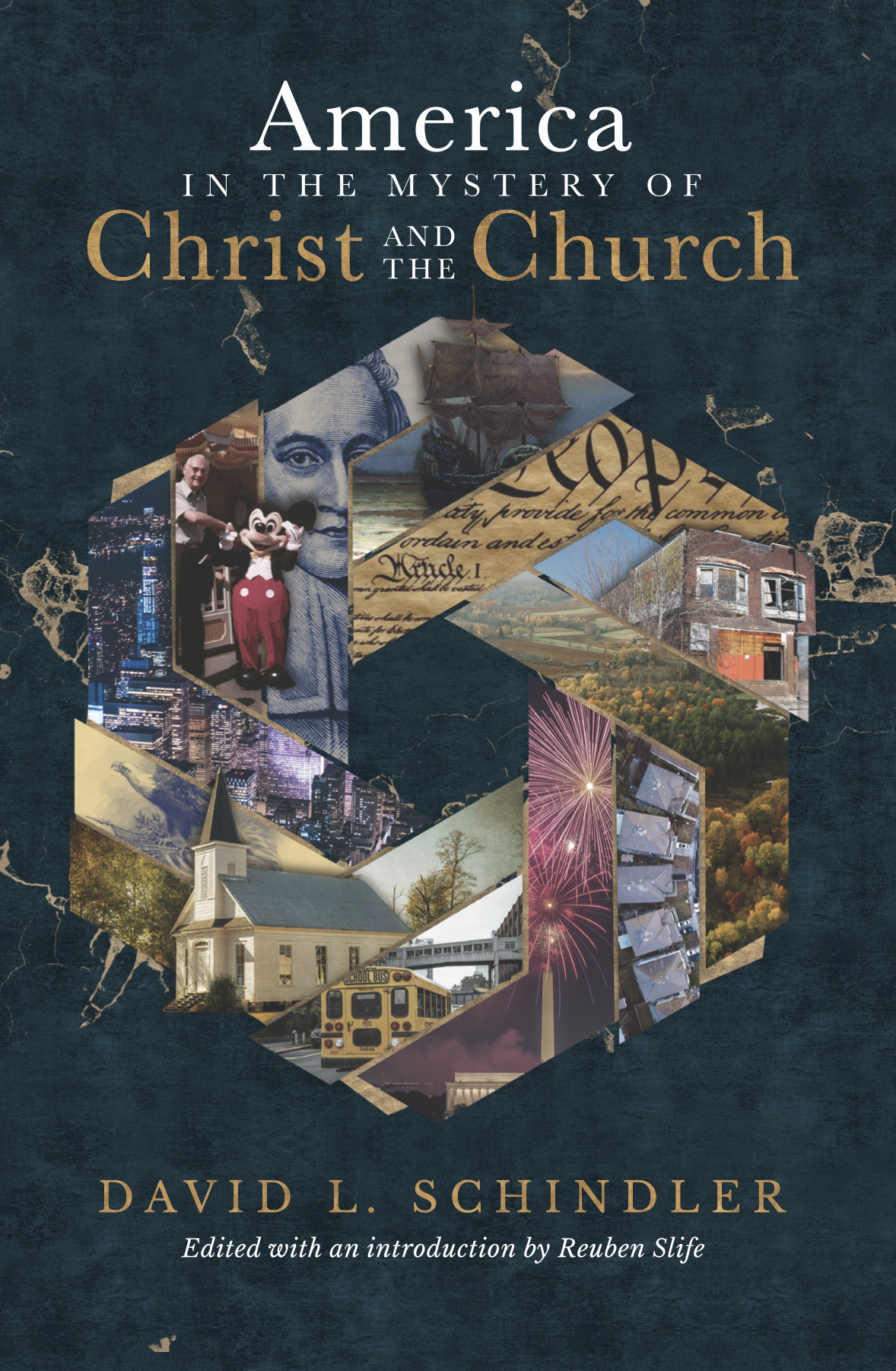
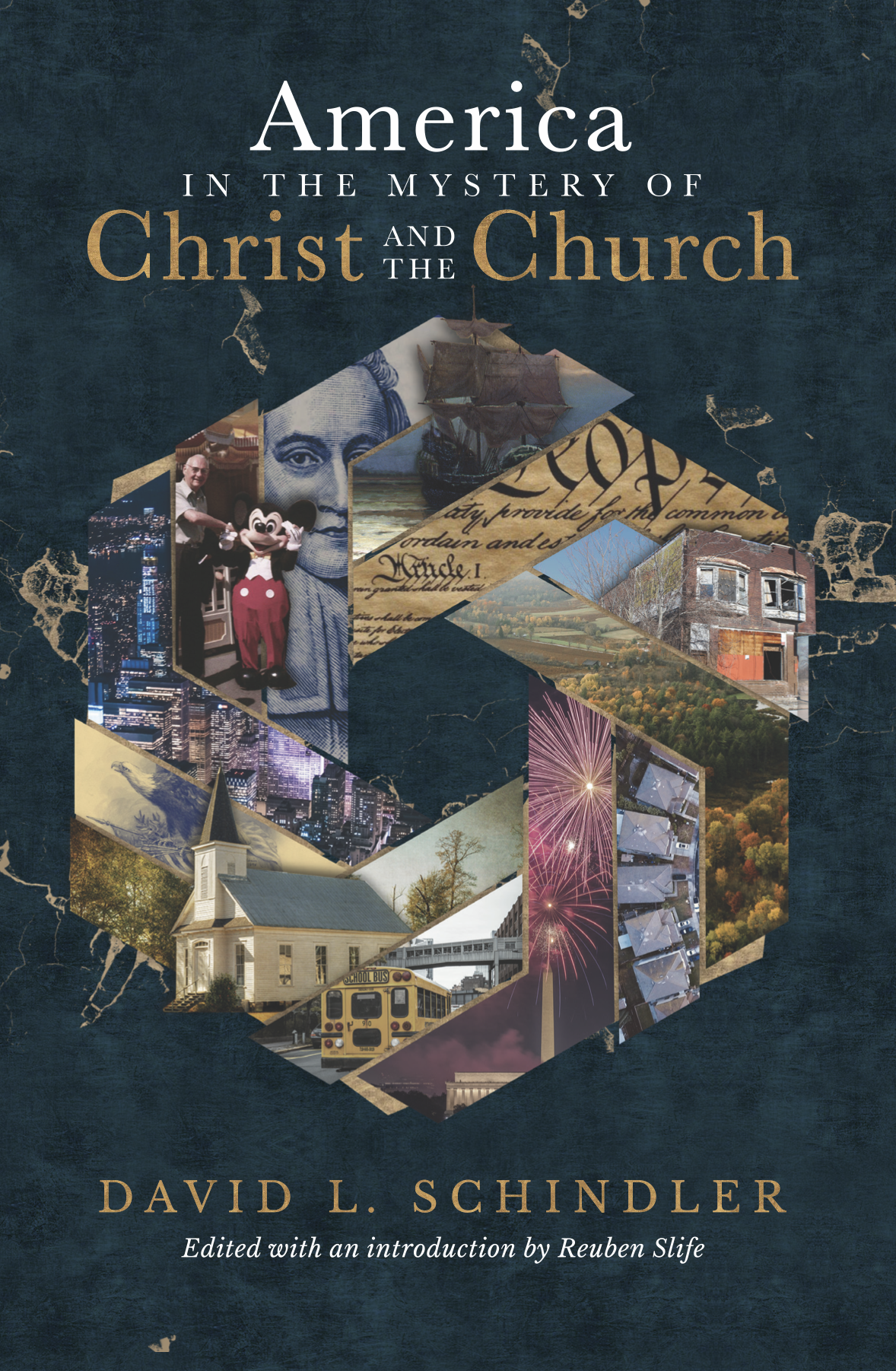
America in the Mystery of Christ and the Church brings together Schindler’s key writings on American culture, presenting his profound and multi-faceted thought in full. It contains a complete chronology-bibliography of his works on America and of the debate with Neuhaus, Novak, and Weigel. In addition, an extensive, original Critical Introduction gives a synthesis of his thought, with special attention to the theme of holiness and to the easily-overlooked positivity of his pursuit: to purify, in Christ, the uniqueness and gifts of the United States.
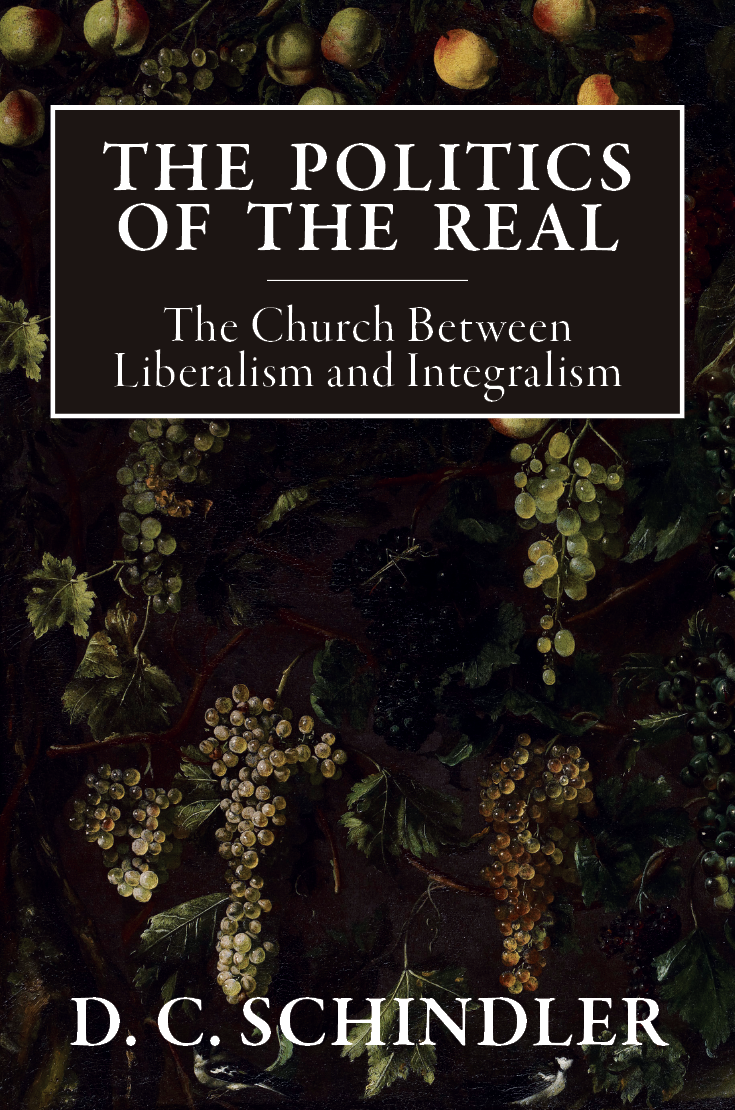
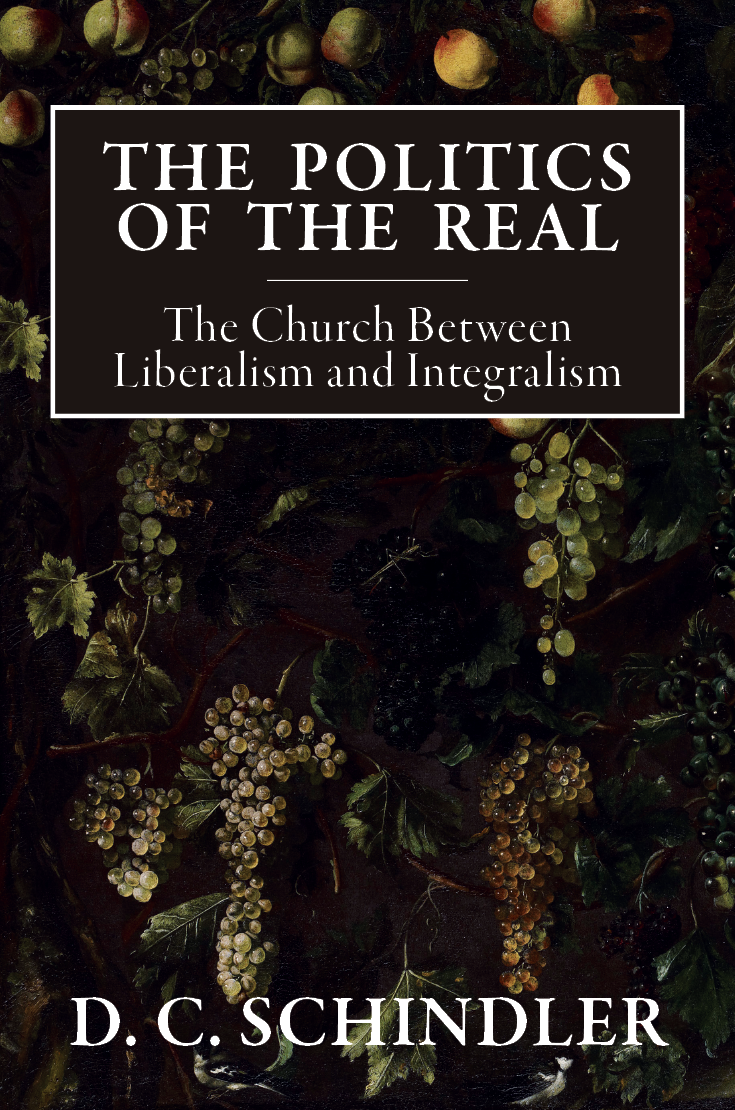
Liberalism is on the defensive. Political discussion is shifting from “what’s wrong with liberalism” to “what’s true about politics”—to the question of what exactly must displace liberalism. But the answer to this question must not be another mere policy prescription. Rather, liberalism’s vision of the world must be replaced by another: by a broader one that can explain liberalism but cannot be explained by it.
In The Politics of the Real, D. C. Schindler takes us to the definitive metaphysical roots of liberal politics: the modern reversal of the priority of act over potency; the modern privileging of empty possibility over flourishing perfection. This reversal is the root of liberal error—and re-prioritizing act is the basis for any genuine alternative.
Schindler shows that liberalism is wrong, not because it has simply “relegated God to the private,” but because it has inverted the world: giving us power (ability to do) without authority (witness to the truth), creating thereby a closed, necessarily totalitarian, horizon. Here, nothing else can be done with the transcendent God but to find a quiet little place to keep him, harmless and out of the way. When we let God out, a cosmic hierarchy of act—of participation in Being Himself—explodes into view. And this changes everything. A true postliberalism moves politics back into a cosmos that is itself analogically ordered to participation in the life of God. With The Politics of the Real, Schindler has profoundly advanced the postliberal conversation.


In the 20th century, a movement of priests and laypeople sought to find a way past the clash of ideologies that wracked Latin America. They found a solution in Latin America itself, which was born out of the conflict between Europeans and natives when, with the appearance of the Virgin Mary at Guadalupe, the grace of God forged one, new people out of strangers and enemies.
This movement—called “theology of peoples”—focuses on the reality known as “a people.” Every human person belongs to a people. And every people has a “world”: the way it makes sense out of life, work, love, and the uncertain future.
In this book, Rocco Buttiglione ranges through history and philosophy to shed light on this key dimension of life. How, through our peoples, do we find meaning? How does Christianity help a people’s “world” develop and grow? And how can peoples shape history, not merely have history happen to them?
This is a reflection on the significance of the contemporary upsurge of populism around the globe and on the proper Christian response. Our modern world—rich and powerful, yes, but ever more systematized, uniform, lonely, and unfree—need not be the last word. With “theology of peoples,” a way opens to a truer peace: to a new and different modernity, founded on the transcendent human spirit.

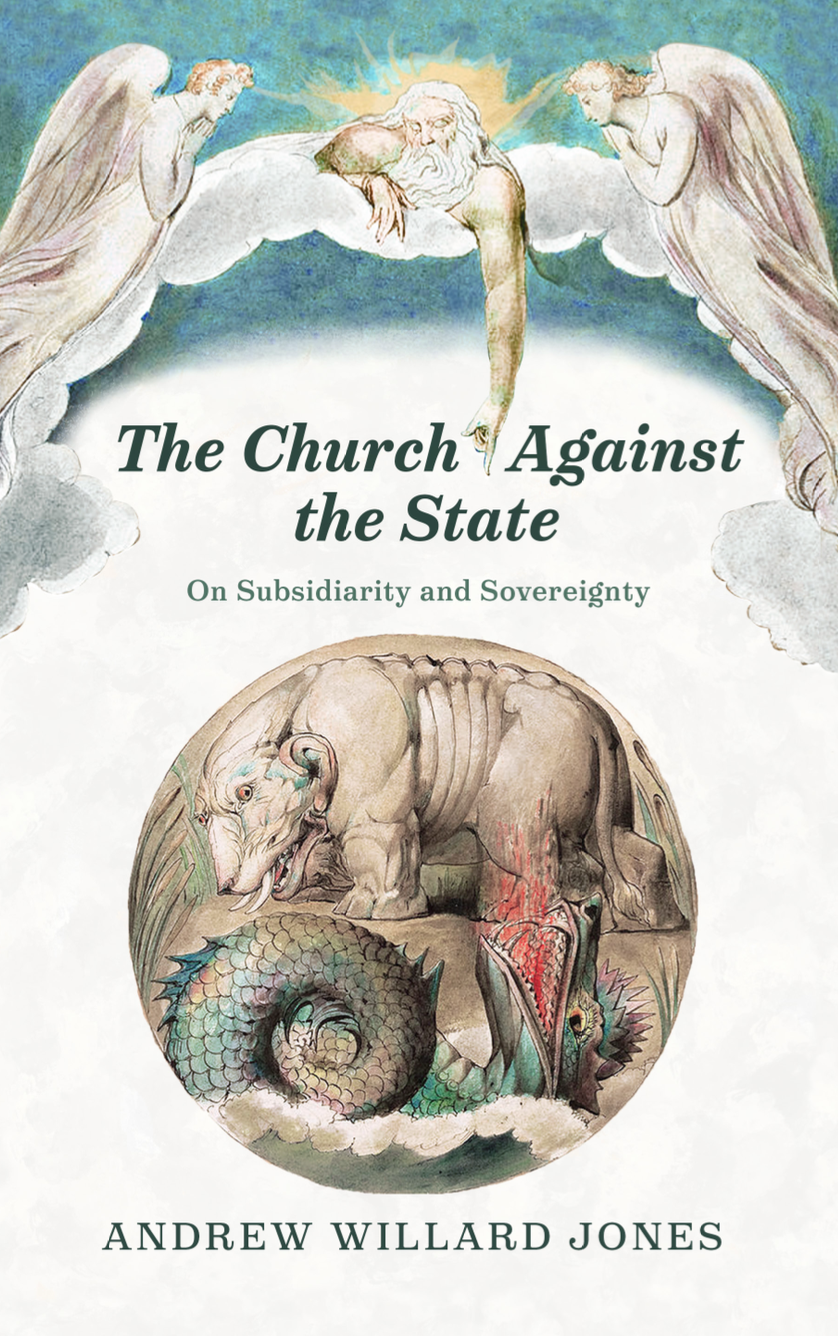
The Church sees the world as God’s good and harmonious Creation, a primordial peace. As Europe began to abandon the Church in the early modern period, it left this vision behind. The new societies it built presupposed primordial competition and fear instead. Order could be secured only by centralized, monopolized power that recognized no higher authority. Theorists of the time called this new conception of power “sovereignty” and the new Leviathan government it required “the state.”
For centuries now, we have lived in systems like this as fish live in water. We use “the state” as a simple synonym for “government,” and even Christians are tempted to take the logic of sovereignty for the way the world is. But the Church has never ceased to preach “subsidiarity”: real, natural distribution of power. She has never ceased to preach the goodness of Creation—or the reality of grace, renewing bonds of love.
In his acclaimed book Before Church and State, Andrew Willard Jones revealed that society in the High Middle Ages was a striving toward liberation by grace, which led to subsidiarity. In The Church Against the State, he argues that this uniquely Christian political form is still with us, present in our love, our courage, and in all that is noble within us, brought to new life through the Church. By grace, we are liberated to live at home and at peace in a limitless, surprising world: a world in which every action, every relationship, and every institution is open to the heavens.
Books in inventory


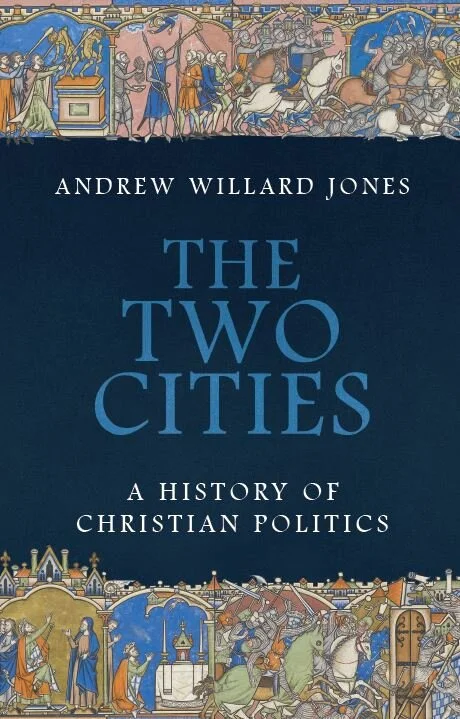
In The Two Cities: A History of Christian Politics, Andrew Willard Jones rewrites the political history of the West with a new plot, a plot in which Christianity is true, in which human history is Church history.
The Two Cities moves through the rise and fall of empires; cycles of corruption and reform; the rise and fall of Christendom; the emergence of new political forms, such as the modern state, and new political ideologies, such as liberalism and socialism; through the horrible destruction of modern warfare; and on to the plight of contemporary Christians. These movements of history are all considered in light of their orientation toward or away from God.
The Two Cities advances a theory of Christian politics that is both an explanation of secular politics and a proposal for Christians seeking to navigate today's most urgent political questions.

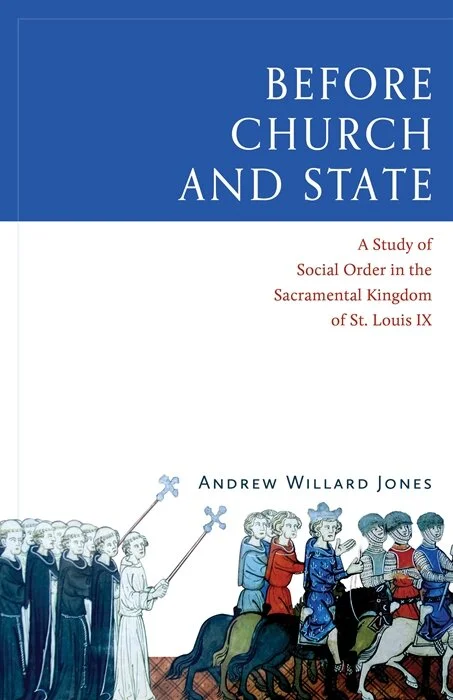
Before Church and State: A Study of Social Order in the Sacramental Kingdom of St. Louis IX by Andrew Willard Jones explores in great detail the “problem of Church and State” in thirteenth-century France. It argues that while the spiritual and temporal powers existed, they were not parallel structures attempting to govern the same social space in a contest over sovereignty.Rather, the spiritual and the temporal powers were wrapped up together in a differentiated and sacramental world, and both included the other as aspects of their very identity. The realm was governed not by proto-absolutist institutions, but rather by networks of friends that cut across lay/clerical lines. Ultimately, the king’s “fullness of power” and the papacy’s “fullness of power” came together to govern a single social order.
Before Church and State reconstructs this social order through a detailed examination of the documentary evidence, arguing that the order was fundamentally sacramental and that it was ultimately congruent with contemporary incarnational and trinitarian theologies and the notions of proper order that they supported.
Fear and Trembling in Las Vegas functions as the perfect sequel to Will Hoyt’s The Seven Ranges. In The Seven Ranges, Hoyt sought answers to how and why small, self-sufficient landholders in eastern Ohio consented to the destruction of once-thriving townships and even topography itself via strip mining in the 1960s. Surprisingly, America itself and its grandeur as a project came into view after following strictly localized clues. Now, in Fear and Trembling, Hoyt details a different kind of devastation—the collapse of Western Civilization as experienced by residents in eastern Ohio, Cleveland, and Michigan between 1994 and 2024. In this case, he employs popular culture as a lens rather than land. Yet, despite these differences, America and its grandeur as a project once again come into view. Readers will close this new book with a firm grasp not only on the importance of the American dream, but also on the timeliness of its promise.


